



Product Description
0 degree FUJI moving walk: Designed for Flat Surfaces, Committed to Reliability, Smoothness, and Value
A moving walkway escalator is a variation of the traditional escalator that employs a track system to propel the walkway. This innovation enhances speed, facilitating quicker traversal of stairs. Various models of moving walkway escalators exist, offering diverse options to users.

Advantages of Using a Moving Walkway
Time-Saving: By reducing the time it takes to traverse a large space, moving walkways can help passengers reach their destinations more quickly.
Efficiency: Moving walkways optimize pedestrian flow, especially in high-traffic areas, by accommodating a large number of people simultaneously.
Convenience: For individuals with luggage or mobility issues, moving walkways provide a convenient and accessible means of transportation.
Types of Moving Walkways
Belt Type Moving Walkway
The belt type moving walkway consists of a rubber belt, essentially a conveyor belt. Belt type moving walkways can also be inclined, and even be flat, then inclined. In some cases, these moving walkways could be used with shopping carts, where the wheels get locked to the moving walkway.
Pallet Type Moving Walkway
The pallet type moving walkway is the common type of moving walkway today. The pallets are metal, and are on a track. Pallet type moving walkways can also be inclined, and even be flat, then inclined.
Glidepath Glidewalk Moving Walkway
This type of moving walkway is a cyclic moving walkway (as in, it goes in a circle), that can curve many times. This moving walkway consist of segments, with wheels to keep them in a track, that can rotate. This type of moving walkway can only be flat, and does not have handrails. This type of moving walkway can be much wider than common types of moving walkways.
What are the Essential Elements of a Travelator?
Conveyor Belt: This component constitutes the flat, continuous belt designed to transport passengers along the travelator. Typically composed of robust materials like rubber, it is upheld by a series of rollers.
Motor: Positioned beneath the travelator, the motor propels the conveyor belt, facilitating passenger movement. It interfaces with the supporting rollers to enable belt motion.
Control System: Responsible for overseeing the travelator's speed and ensuring smooth, safe operation, the control system incorporates sensors, switches, and a variable frequency drive. These components regulate motor speed.
Handrails: Mounted on both sides of the travelator, handrails furnish passengers with stability and support during transit. Crafted from durable materials such as stainless rubber, they enhance safety.
Safety Measures: Installed along the travelator's length, safety features mitigate risks and safeguard passengers. These may comprise emergency stop mechanisms, obstruction-detecting sensors, and prominent warning signage.
Frame and Supporting Structure: Serving to secure the conveyor belt and ancillary components, the frame and supporting structure impart stability to the travelator. Typically constructed from steel, they uphold the system's integrity.
Construction Layout Drawing and Specifications


Standard Function

Where Are Travelators Commonly Installed?
Travelators are typically installed in public or commercial settings where there is a need to move a large number of people quickly and efficiently over short to medium distances. Some common locations for travelators include:
Airports: Often found in airports, travelators assist passengers in traversing between terminals, gates, or concourses, easing their journey.
Train Stations: In train stations, travelators facilitate movement between platforms or different sections of the station, enhancing commuter convenience.
Shopping Centers: Within shopping centers, travelators streamline navigation between various levels or zones of the mall, enhancing the shopping experience.
Exhibition Halls and Convention Centers: Large exhibition halls or convention centers may feature travelators to aid attendees in navigating between different exhibit halls or conference rooms, optimizing event flow.
Public Transport Hubs: Bus or subway stations may integrate travelators to aid passengers in moving between different sections of the station or transitioning between various modes of transportation, enhancing transit efficiency.

What are the Distinct Differences Between a Moving Walkway and an Escalator?
Speed and Direction
Escalators facilitate vertical movement, while moving walkways propel individuals horizontally, typically in a level direction. Moving walkways operate at a faster pace compared to escalators, making them prevalent in bustling locations such as airports and train stations.
Capacity
In terms of capacity, escalators have a limited capability to transport individuals due to their confined space. Moving walkways, conversely, can accommodate larger volumes of people simultaneously, owing to their broader design.
Safety Features
Modern escalators are equipped with a variety of safety enhancements, including skid-resistant steps, handrails, and safety sensors. In contrast, contemporary moving walkways feature safety components such as handrails, with flat, non-slippery surfaces instead of steps.
Inclination and Comfort
Moving walkways provide a heightened sense of safety as individuals tend to feel more at ease with the lower degree of inclination. Unlike escalators with stair-like steps arranged in an inclined manner, moving walkways offer a step-free experience, enhancing comfort and confidence during transit.
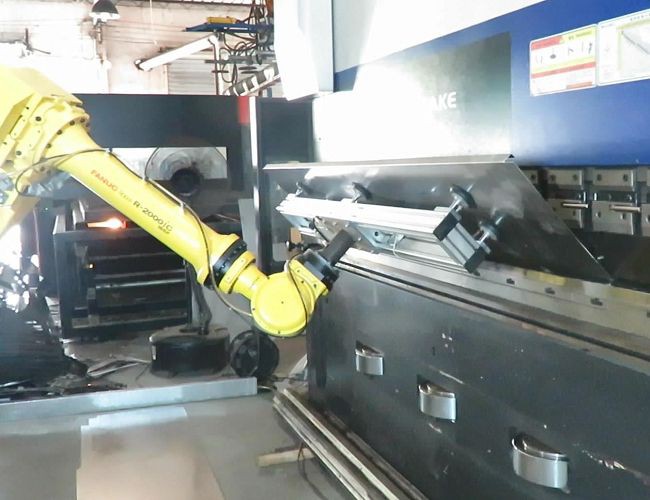
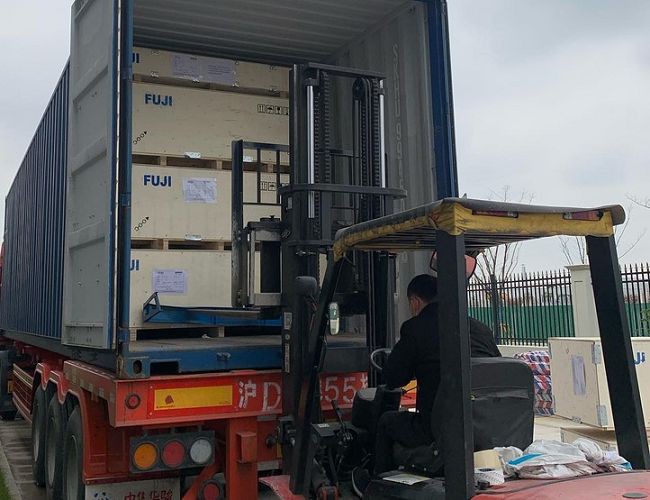
Production Flow




Tips for Riding Moving Walkways Safely
When Entering Moving Walkways, Follow These Guidelines:
Don't ride with canes, walkers, carts or wheeled vehicles, including strollers.
Don't ride barefoot or with loose shoelaces.
Step on and off with caution. Take extra care if you are wearing bifocals.
Hold children firmly with one hand.
Hold small packages firmly in one hand.
Grasp the handrail as you step promptly onto the moving step or walkway.
Do not touch the sides below the handrail.
Keep loose clothing clear of steps and sides.
If you are uncomfortable boarding or riding an escalator, use the elevator instead.
When Riding Moving Walkways, Follow These Guidelines:
On moving walkways, stationary passengers should stay to the right and let those walking pass on the left.
Keep feet away from the sides.
Keep a steady grip on the handrail.
Don't rest your handbag or parcels on the handrail.
Pay attention to the moving walkway - don't be distracted by your surroundings.
Don't lean against or over the sides.
Don't run.
Never sit on the escalator step or moving walk.
Parents, make sure children ride in a proper manner.
FAQs
Q: What is a moving walkway called?
Q: What is the difference between a moving walkway and an escalator?
Put simply, an escalator is a moving staircase that transports people vertically while a moving walkway is a moving walkway transporting people horizontally.
Q: How fast is the moving walk?
Q: What is the purpose of a moving sidewalk?
Q: What are moving walkways called in airports?
Q: Should you walk on a moving walkway?
Q: What are the different types of moving walkways?
Q: How big is a moving walkway?
Q: What are the advantages of travelators?
Outstanding ride quality with low noise and vibration.
Ease of installation and maintenance.
Designed and built to provide a long service life and reliable operation.
Energy efficient with regeneration systems that can reduce energy consumption by up to 60 %
Q: Why do airports have moving walkways?
Q: Are moving walkways safe?
Hot Tags: 0 degree moving walk, China 0 degree moving walk manufacturers, suppliers, factory, 1000mm Wide Airport FUJI Moving Walk, 12 Degree Moving Walk, 800mm Wide Supermarket FUJI Moving Walk, Moving Walk, 0 Degree Moving Walk


