



Product Description
FUJI medical elevators have become an indispensable means of transportation in medical institutions due to their excellent stability and reliability. Whether it is a large hospital or a rehabilitation center, FUJI is committed to providing safe and comfortable transportation services to help medical staff better treat patients.
FUJI medical elevators use advanced control systems and high-quality components to ensure smooth and smooth operation under various operating conditions and reduce the risk of accidents caused by elevator failure or instability. In addition, FUJI medical elevators have undergone strict quality inspection and durability testing. The elevators can meet the long-term and high-intensity use requirements of medical facilities. Its solid structural design and advanced fault diagnosis system ensure the safety and reliability of the elevator during operation, greatly reducing the frequency of maintenance and component replacement, and reducing operating costs.
In emergencies, FUJI medical elevators can also respond quickly. The elevator is equipped with emergency call buttons, safety doors and other safety facilities, which can initiate emergency braking procedures or contact rescue personnel at the first time, providing timely safety protection for passengers.
FUJI medical elevators also pay attention to detail design and user experience. Comfortable interior, easy-to-operate control system, clear safety signs. These detailed designs not only improve the comfort of passengers, but also provide medical staff with a more convenient operating experience, helping them better treat patients.

Construction Layout Drawing and Specifications


Standard Function
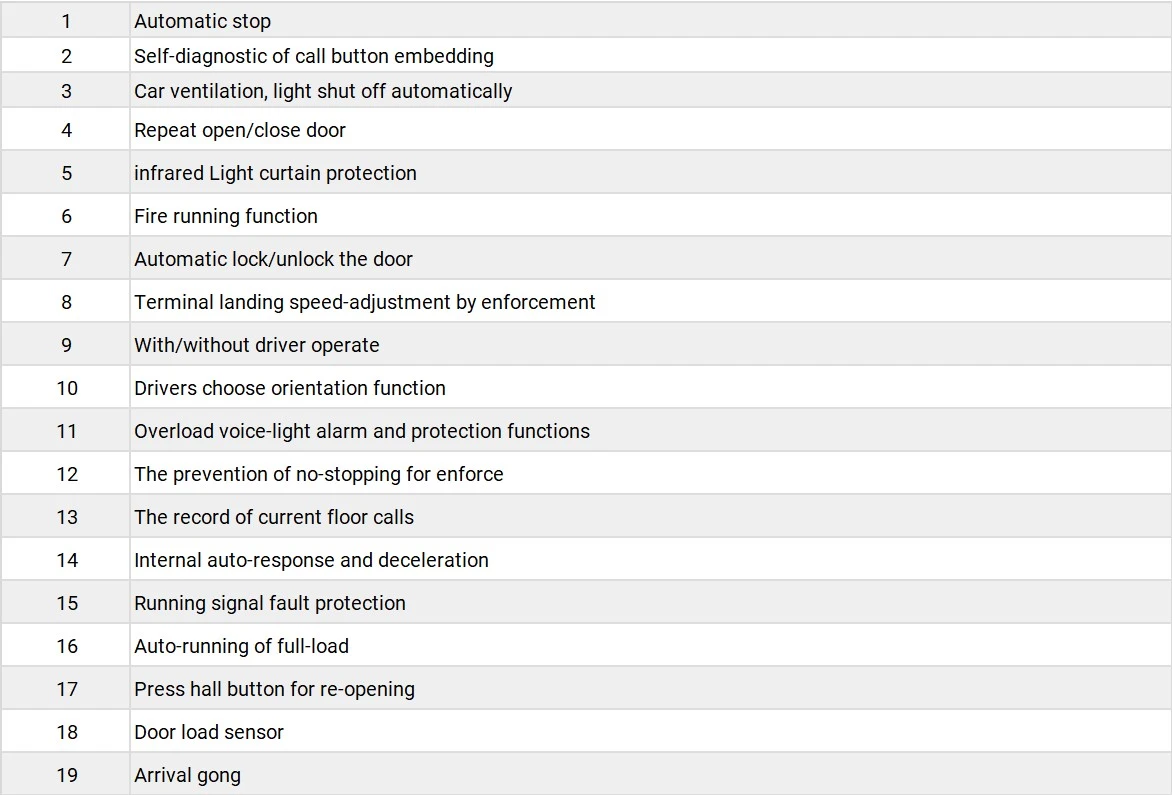
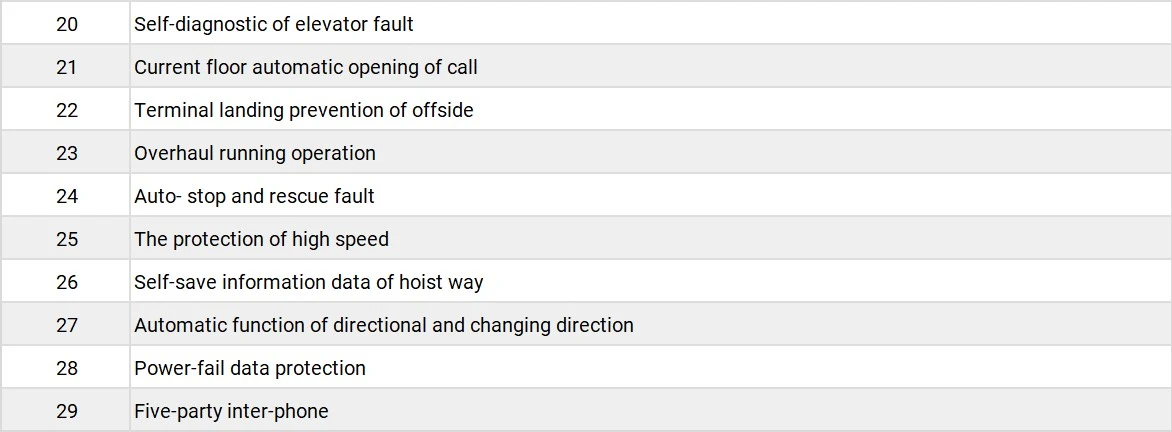
Basic functions of FUJI medical service elevator
FUJI medical service elevator has a variety of basic functions. Some key points are as follows:
1. Efficient Transportation: The main function of FUJI medical service elevator is to provide vertical transportation, mainly serving medical facilities. It can quickly and accurately transport beds, stretchers, medical equipment, and supplies, meeting the needs of efficient transportation in medical facilities.
2. Smooth Operation: The smooth operation of medical elevators is very important and is related to the comfort and safety of patients. Fuji Medical Elevator adopts advanced traction technology and intelligent control system to ensure smooth and comfortable elevator operation.
3. Safety: In the design of medical elevators, safety must be considered. Fuji medical elevators are equipped with multiple safety measures such as multi-layer protective door systems, shock absorption devices, and intelligent control systems to effectively reduce the risk of accidents and ensure passenger safety.
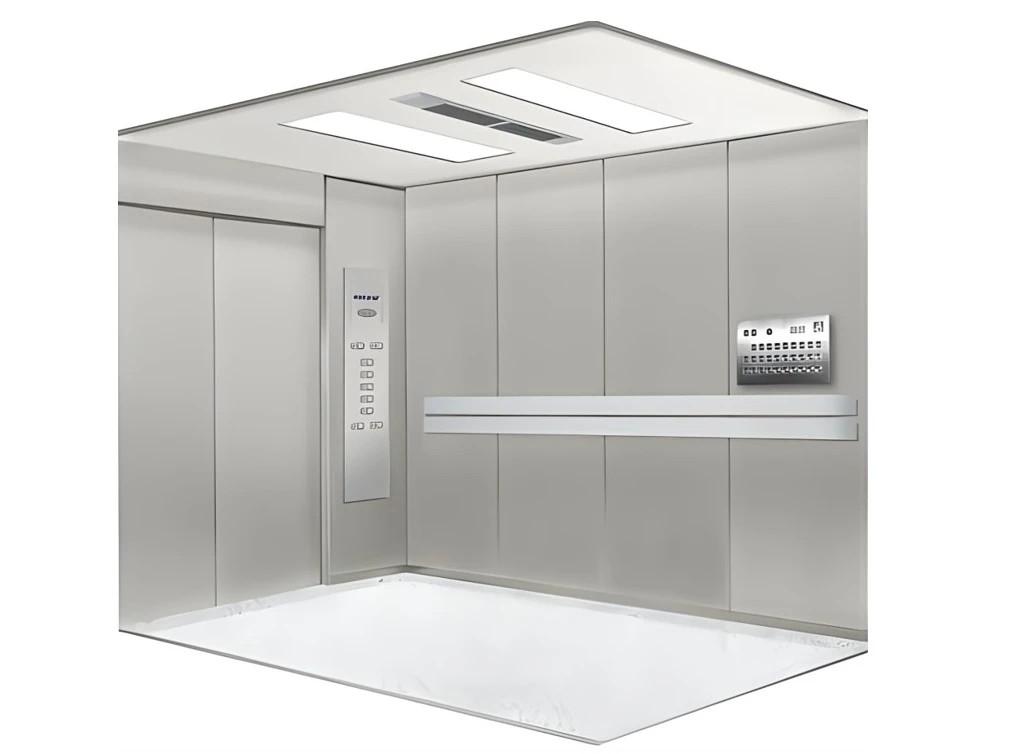
4. User-Friendly Design: FUJI medical service elevator takes into account human factors in its design to meet the specific needs of medical settings. For example, the interior space is spacious and bright, facilitating the movement of stretchers and medical equipment; the control panel is simple and easy to use, making it convenient for healthcare providers to operate; and the operating speed is stable and adjustable, adapting to different needs.
5. Timed Sterilization Technology: Considering the high hygiene standards in medical facilities, FUJI medical service elevator is equipped with a timed sterilization technology. A dedicated sterilization device periodically sanitizes the interior of the elevator, ensuring a fresh and natural environment free from germ hazards.
Production Flow




What are the Requirements for Hospital Lift Installation?
Adherence to Safety Standards: Hospital lifts must comply with pertinent safety standards and regulations, encompassing ASME A17.1 Safety Code for Elevators and Escalators, as well as the Indian with Disabilities Act (ADA), among others.
Capacity and Load Limits: Hospital lifts should possess sufficient capacity for their intended purpose, capable of accommodating patients, medical apparatus, and personnel. They must also withstand the maximum weight of the anticipated load.
Backup Power Provision: Hospital lifts are mandated to be equipped with emergency power sources, such as battery backups, ensuring continued operation during power outages.
Communication Infrastructure: Hospital lifts necessitate communication systems, such as emergency phones or intercoms, facilitating seamless communication between passengers and lift operators or control centers.
Specialized Functionalities: Hospital lifts must integrate special functionalities like automatic leveling, door operations, and emergency stop mechanisms, ensuring the secure and efficient movement of patients and medical equipment.
Regular Inspection and Maintenance: Hospital lifts must undergo periodic inspections and maintenance to ensure compliance with safety standards and optimal operational functionality.
Training Initiatives: Comprehensive training programs should be provided for staff and users, imparting knowledge on safe and effective lift utilization.
Clear Signage: Adequate signage must be prominently displayed, offering guidance on lift operation and emergency protocols.
Medical Elevator Recommendations Based on Building Height
For low-rise buildings, consider utilizing compact gear-less drives, steel cables, lightweight, fireproof paneling, and manual controls. If budget permits, opt for Machine Room-Less (MRL) design with spacious elevator cabins. Enhance durability with metal or stainless steel wall and door panels in the enclosure. Choose between foot-operated controls or smart, voice-based access for destinations.
Mid-rise buildings, with up to 350 feet of vertical travel and around 30 stops, may benefit from MRL configurations. Collaborate with elevator design companies, such as FUJI, to optimize space utilization with appropriate shaft dimensioning. Implement energy-efficient solutions to reduce power consumption by up to 30%, utilizing longer-lasting materials and automated maintenance.
Electrical traction elevators are preferable for high-rise buildings due to their ability to travel longer distances at higher speeds. These elevator cars move over steel guardrails, propelled by a system of cables passing through a traction sheave installed in the machine room. Connection to a counterweight helps reduce design costs compared to hydraulic elevators.
Hospitals and large care facilities should incorporate seismic activity detection sensors on key installations like elevator cars and counterweights. These sensors can detect abnormal disturbances along three axes, triggering actions such as powering down the elevator or alerting passengers to quickly exit at the nearest exit.
FAQs
Q: What is the purpose of the elevator in a hospital?
Q: How much weight can a service elevator hold?
Q: What are the medical elevators used for?
Q: Where should elevators be placed?
Q: What is the elevator emergency protocol?
Do not try to force the doors open or attempt to get out of the elevator on your own.
Use the emergency call button in the elevator to report situation. Give the dispatcher the following information: Name of the building. Building location.
Q: What is a service elevator?
Q: What is the minimum size for a service elevator?
Q: What is the standard height of a service elevator?
Q: What is the standard size of a service elevator?
Q: Who benefits from elevators?
Q: How important are elevators?
Q: What are the do's and don'ts in an elevator?
Hot Tags: medical service elevator, China medical service elevator manufacturers, suppliers, factory, Side Opening FUJI Bed Elevator, Center Opening FUJI Bed Elevator, FUJI Bed Elevator, Medical Service Elevator, Hospital Elevator


