


In modern architectural design, residential elevator has become an essential element to enhance living comfort and convenience. With the continuous advancement of technology and the growth of personalized demands, the types and styles of residential lifts and elevators are becoming increasingly diverse. This article will take you into the world of residential elevators, exploring 10 different types of residential elevators, allowing you to enjoy the convenience of modern life while appreciating the perfect combination of technology and aesthetics.
1. Hydraulic Elevator
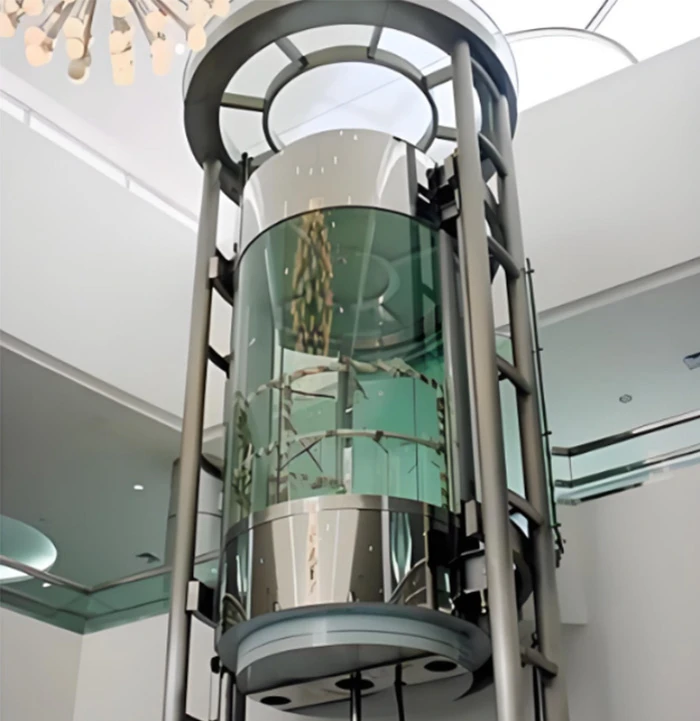
A hydraulic elevator uses a hydraulic power source to pump oil into a cylinder, causing the plunger to move in a straight line, directly or indirectly moving the car through a wire rope. Hydraulic residential elevator is an early and mature technology that most residential elevator companies can produce. It consists of a pump station system, hydraulic system, guidance system, car, door system, electrical control system, and safety protection system.
● Advantages
Low requirements for civil structure: Hydraulic residential elevator does not require a machine room on the roof, reducing the vertical size of the shaft and improving the utilization rate of the shaft and living space. Their installation requirements are low, requiring only one load-bearing wall, with a top height of 2.3 meters with a car or over 1.5 meters without a car.
Safe and reliable: Hydraulic elevators are equipped with various safety protection devices, such as speed limit cutoff valves, overload switches, maximum pressure valves, and oil temperature protection switches, ensuring safe elevator operation. They also do not experience collisions or bottoming and are easy to achieve self-rescue in case of trapping.
Smooth operation and low noise: The hydraulic system of hydraulic elevators can be set away from the shaft, effectively isolating the noise source, controlling the elevator noise at around 45 decibels, providing a comfortable ride.
● Disadvantages
High power consumption: Hydraulic elevators consume relatively high power during operation, especially during continuous operation.
Slow lifting speed: Compared with other elevators, the lifting speed of hydraulic elevators is slower, unsuitable for situations requiring fast up and down travel.
High maintenance cost: The maintenance of hydraulic elevators requires professional elevator factories or technicians due to the complexity of the hydraulic system, which requires regular replacement of hydraulic oil and other maintenance work, increasing maintenance costs.
● Applicable Occasions
Renovation of old buildings: As the renovation of old buildings is limited by the original civil structure, the use of hydraulic elevators is a better choice.
Classical buildings: Adding elevators to classical buildings cannot damage their appearance and internal style, so using hydraulic elevators is a better solution.
Low-rise buildings: Hydraulic residential elevator has low requirements for civil structure and are suitable for low-rise buildings such as villas and shops.
● Price
This type of residential elevator price will vary according to the elevator's carrying capacity, lifting height, decoration level, etc. When purchasing a hydraulic elevator, factors such as elevator quality, performance, and after-sales service should also be considered, choosing to cooperate with a residential elevator factory with good reputation and strong technical strength.
2. Traction Elevator
A traction elevator that uses a traction machine to move the elevator up and down. Traction residential elevator mainly consists of a motor, traction machine, control system, car, guide rails, and steel ropes. Its working principle is to drive the traction machine through the motor, and the traction machine pulls the car up and down through the steel ropes to transport people or goods. It is currently the most produced elevator type in residential elevator factories.

● Advantages
High Safety Performance: As an earlier elevator form, traction elevators are very mature in craftsmanship and technology, with high safety performance. The equipped car structure is suitable for low-rise buildings and is unlikely to cause casualties in accidents.
Stable and Noise-free: The main unit of the traction elevator does not require a deceleration box and relies on variable frequency and voltage to control the speed. Therefore, it does not produce noise from gear friction during use, ensuring stable and safe operation without jolts.
High Power Transmission Efficiency: Traction residential lifts and elevators have high power transmission efficiency, allowing quick and smooth transportation of people or goods to the designated floor.
● Disadvantages
Limitations of Building Structure: Traction elevators have certain requirements for installation space, with a top height of 2.7m and a pit depth greater than 25cm, limiting their application in some buildings.
Large Occupied Space: Since traction elevators rely on counterweight for lifting and lowering, they need to provide a certain space for the counterweight. Together with the elevator car itself, a double-track structure is formed, occupying at least twice the original space.
Complicated Installation Process: Traction residential lifts and elevators have complex and diverse equipment structures, including drive, control, safety protection, and other systems, making installation more difficult and cumbersome.
● Applicable Occasions
High-rise Residential Buildings: Traction elevators are usually installed in high-rise residential buildings to facilitate resident access.
Hotels and Shopping Malls: Traction elevators in commercial buildings can quickly and conveniently transport goods to designated floors, facilitating merchant management.
Office Buildings: Traction residential lifts and elevators can facilitate employee access and improve work efficiency.
● Price
This kind of residential elevator price varies depending on factors such as load capacity, lifting height, and decoration level. It generally ranges from 7000 to 30000 USD. Consult professional residential elevator factory based on actual configuration requirements.
3. Vacuum Elevator
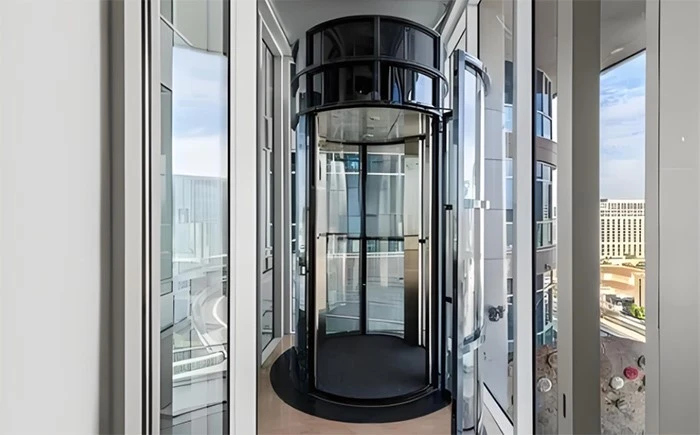
A vacuum elevator based on the principle of vacuum pressure. It creates a vacuum above the car using a vacuum pump, while the bottom of the car is connected to atmospheric pressure. The two are sealed through a sealing ring on the top of the car. Vacuum residential elevator uses the pressure difference to provide power. Due to low demand, there are currently very few residential elevator factories that can provide vacuum elevators.
● Advantages
No Pit Required, Easy Installation: The cylindrical design of the vacuum elevator does not require digging a pit, eliminating the trouble of deep excavation of elevator wells. It is very friendly to existing buildings, allowing for on-demand construction with minimal impact on the building itself and the surrounding environment.
Modular Design, Easy Assembly: The vacuum elevator adopts a modular design, mainly consisting of three parts: the shaft (including the power system), the car, and other auxiliary systems. This design makes the installation and disassembly of the elevator faster and more convenient, with an overall actual installation time of only 1 to 3 days.
Small Occupied Space: Due to its structural characteristics, the vacuum residential elevator occupies only the area of the loading platform, without the need to reserve space for counterweights and frames outside the elevator. It is suitable for spaces with limited area.
● Disadvantages
Limited Lifting Height and Load Capacity: Vacuum elevators have relatively limited lifting height and load capacity, which may not be suitable for taller buildings or occasions requiring heavy loads.
Higher Maintenance Cost: As the components of vacuum residential lifts and elevators are more prone to wear and tear, their maintenance costs are often higher.
● Applicable Occasions
Vacuum residential elevator is suitable for low-rise small buildings, villas, private residences, and other occasions, especially for spaces with limited area and high requirements for installation convenience.
● Price
Due to low demand, there are few residential elevator factories that can produce vacuum elevators, resulting in higher prices compared to other elevator types. Communicate with residential elevator company to obtain the most competitive prices based on actual building and budget requirements.
4. Pitless Elevator
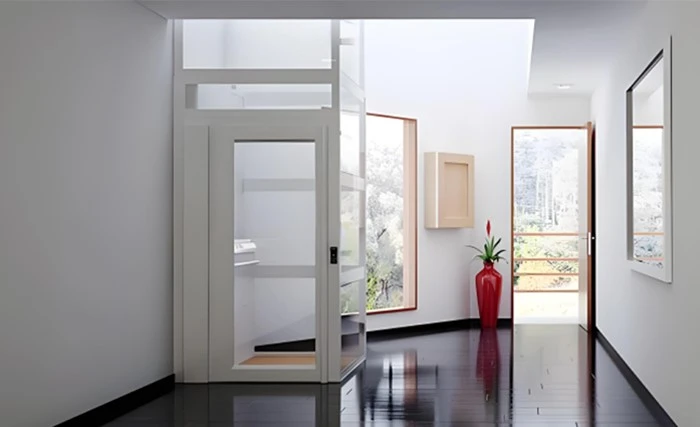
Pitless elevators are a special type of elevator that does not require a traditional elevator pit. They can be installed directly on the finished ground surface, without the need for any civil construction pit, thus saving space and making installation more convenient. Residential elevator company can choose suitable pitless elevator types based on the customer's actual building dimensions and budget.
● Advantages
Space-saving: As pitless elevators do not require a pit, they significantly save on building space and improve space utilization.
Easy installation: Due to their pit-free design, the installation process of pitless elevators is relatively simple, saving on installation time and costs.
Perfect integration with decoration: The stylish and beautiful design of pitless residential lifts and elevators can be perfectly integrated with home decor, increasing the lighting and aesthetics of the residence.
● Disadvantages
Difficult maintenance: Pitless elevators require higher maintenance and upkeep, requiring more professional technicians for operation and maintenance.
Higher cost: The design and installation of pitless elevators require the participation of more professional technicians, resulting in relatively higher installation costs. Additionally, the maintenance costs of pitless elevators may also increase due to their technical complexity.
● Applicable Occasions
Pitless residential elevator is suitable for installation in high-rise duplex buildings with limited space, such as family villas and small commercial spaces. They are also suitable for occasions where there are high demands on aesthetics and decoration integration due to their stylish design and compatibility with interior decor.
● Price
Generally speaking, pitless residential elevator price is slightly higher than traditional elevators. Residential elevator company will provide quotations based on order quantity and configuration requirements. Choosing a residential elevator factory with a larger output can reduce production costs.
5. MRL Elevator
Machine Room-Less (MRL) elevators that do not require a dedicated enclosed machine room in the building for installing elevator drive motors, control panels, speed governors, and other equipment. This elevator technology represents a significant innovation in traditional elevator technology. By adopting variable frequency speed control and microcomputer control, the control panel, motor, speed governor, and other equipment are installed inside the hoistway, eliminating the need for a dedicated machine room. This effectively improves the utilization rate of building area while reducing construction costs. Due to the advantages of MRL elevators, their shipment ratio is continuously increasing among residential elevator companies.

● Advantages
Space-saving: MRL residential elevators eliminate the need for a dedicated machine room, saving on space that can be used for other purposes, thus improving the utilization rate of building area.
Smooth operation: By using a compact gearless motor and a 2:1 traction system, noise caused by traditional gear engagement in the machine room is eliminated, resulting in smoother operation.
Strong adaptability: MRL elevators have strong adaptability and can meet the needs of different occasions, such as high-end office buildings, star-rated hotels, hospitals, etc.
● Disadvantages
Noise and vibration: Although noise reduction technology is adopted, noise and vibration issues still exist due to the placement of the motor inside the hoistway, especially during high-speed operation.
Temperature impact: The main heat-generating components such as the motor are located inside the hoistway, without specialized cooling facilities, which may lead to excessive internal temperature, affecting the normal operation of the elevator.
Difficulty in fault repair and personnel rescue: As the motor, control panel, and other key components are located inside the hoistway, fault repair and personnel rescue are relatively difficult, requiring professional elevator companies or technicians.
● Applicable Occasions
Low-rise buildings: MRL residential lifts and elevators are suitable for low-rise buildings such as residential areas, office buildings, shopping malls, and hospitals. They can make full use of space to meet vertical transportation needs.
Retrofitting of old buildings: For the renovation of old buildings, MRL elevators have a small modification difficulty and do not require large-scale demolition and construction.
Limited space: In small or narrow spaces, MRL elevators can make full use of space to meet vertical transportation needs.
● Price
Compared to elevators with a machine room, the price of MRL elevators will increase by 500-1000 USD due to the need for residential elevator factory to replace traction machines with higher costs.
6. Spiral Elevator
The spiral residential elevator utilizes the relative motion between the spiral and the load-bearing nut to drive the car up and down. The elevator's drive motor and control system are integrated into the car, making the overall structure compact and achieving a high utilization rate of shaft space. It can realize a structure without car walls. With only a minimal pit space of about 5cm, it can almost meet the requirements of all top-floor spaces.

Due to its compact structure, it is easy to achieve a diverse and modern industrial design. The overall appearance is concise and elegant, often adopting a manual sliding door or an automatic pivot door structure.
The car has no shock absorber, so its comfort and stability are inferior to traction villa elevators. The safety of manual sliding doors is far lower than automatic elevator doors. The rated speed is usually below 0.2m/s, only half the transportation efficiency of traction elevators.
● Advantages
Saves floor area: The spiral residential elevator is the most space-saving home elevator product in China, requiring a minimum installation space of only 900X900mm, with a shaft utilization rate of up to 65%.
Low civil engineering requirements: Due to its slow speed and safe mechanical structure, it does not require buffers, speed limiters, or excavation of elevator pits. It can be installed with only one wall.
Flexible, stable, and reliable structure: Spiral elevators can easily achieve right-angle opening, through opening, and 3-sided opening without affecting elevator stability or increasing shaft area. Its simple structure, low failure rate, and few wearing parts save customers from later maintenance troubles.
● Disadvantages
High mechanical noise: As the motor moves with the platform, the mechanical noise of the motor inevitably transmits to users.
Slow operating speed: The operating speed of spiral elevators is between 0.15-0.25 meters per second, slower than ordinary traction elevators.
Poor comfort: The platform is directly connected to the spiral, and mechanical vibrations transmit to the platform, lacking the smooth feel of traction or hydraulic elevators.
● Applicable occasions
Spiral residential elevator is mainly suitable for family homes, such as multi-storey villas, commercial spaces like offices, hotels, restaurants, industrial areas like factories or warehouses, medical and rehabilitation centers, and public facilities like libraries, museums, and shopping centers.
● Price
This residential elevator price vary depending on brand, model, configuration, and customization requirements. For example, a spiral residential elevator from a certain brand costs around 5000USD. Specific prices need to be determined based on the elevator company's quote and the customer's actual needs.
7. Linear Motor Elevator
A linear motor residential elevator is driven by a linear motor. Unlike traditional rotating motors, the rotor of a linear motor is straight and moves parallel to the stator axis. Based on the principle of electromagnetic induction, the linear motor elevator achieves the lifting and lowering of the car through direct drive without traditional elevator components like steel ropes and traction sheaves.

● Advantages
Stable operation and low noise: Due to the linear motion characteristics of the linear motor, the elevator operates more smoothly, reducing vibration and noise in the car and enhancing the passenger's riding experience.
Low energy consumption: Linear motor residential lifts and elevators do not require high-energy-consuming hydraulic systems or mechanical transmission devices, resulting in relatively low energy consumption costs.
Small footprint: The linear motor's operating mechanism is linear, occupying less space. It can be installed in narrower elevator shafts, improving the utilization rate of floor space.
● Disadvantages
Complex technology: The technology of linear motor elevators is relatively complex, requiring professional technicians for installation and maintenance.
High cost: Due to the high technological content of linear motor elevators, their manufacturing and maintenance costs are also relatively high.
High installation requirements: The installation of linear motor elevators requires high precision. Improper installation may affect elevator performance and operational stability.
● Applicable occasions
Linear motor residential elevator is suitable for occasions with high requirements for operational stability, noise, energy consumption, and precision, such as high-end office buildings, star-rated hotels, and medical facilities. Additionally, due to their small footprint, they are also suitable for buildings with limited space.
● Price
Due to their high technological content, this type of residential elevator price is higher than traditional elevators. In selecting a linear motor elevator, factors such as elevator quality, performance, and after-sales service should be considered, and choosing an excellent residential elevator company is even more important.
8. Gantry Steel Wire Rope Traction Elevator
The gantry steel wire rope traction elevator uses a traction machine as its main driving device, with the steel rope moving within the gantry. It typically utilizes the balancing principle of counterweight and car, with the car guide rails positioned on both sides of the car. A permanent magnet synchronous gearless traction machine drives the car up and down via the steel wire rope.

The residential elevator car system with a gantry structure aligns the suspension point, elevator center of gravity, and guide rail center, and is equipped with a double-layer car bottom with a shock absorption system, providing excellent ride comfort. With a load capacity of 400kg, the villa elevator's rated power is only around 1kW, equivalent to the power consumption of a television. This series of elevators is currently the mainstream product of residential elevator companies, accounting for about two-thirds of the market share, and is the preferred choice for villa elevators.
● Advantages
Stability and Reliability: The gantry steel wire rope traction elevator employs advanced elevator control technology, ensuring strong stability and reliability. The traction steel wire rope drive method effectively reduces elevator accidents caused by mechanical failures and can adapt to more complex usage environments.
Energy Efficiency: The traction elevator utilizes advanced energy-saving technology, effectively reducing energy consumption and improving efficiency. Its drive system adopts variable frequency speed control technology, allowing adjustment of elevator speed and operation volume, reducing energy consumption and extending equipment lifespan.
Mature Technology: Traction gantry elevator technology is mature, widely used, stable in operation, low in power consumption, and fast in speed.
● Disadvantages
Large Size: Due to the counterweight design, the traction gantry elevator occupies a relatively large space. For the same car area, the shaft needs to be larger to accommodate the counterweight.
Potentially High Host Power: In some designs, to forcibly drive the car up and down, the host power may be larger, leading to increased energy consumption and costs.
● Applicable Occasions
The gantry steel wire rope traction elevator is suitable for large object handling applications such as cargo transportation and construction sites. It is also suitable for homes, villas, duplexes, and low-rise office buildings requiring vertical transportation.
● Price
This residential elevator price vary based on factors like brand, specifications, and configuration. For example, in residential elevator factories, some well-known brands like Schindler, ThyssenKrupp, and Kone usually have a four-floor price of around 35,000 USD. While some joint-venture brands like Shanghai Mitsubishi, GiantKone, and Otis offer a four-floor price of approximately 30,000 USD.
9. Steel Belt Traction Elevator
The steel belt traction residential elevator uses steel belts as the traction medium. Driven by the elevator motor, it connects the elevator car and counterweight using steel belts to achieve vertical movement. Due to its unique structure and advantages, the steel belt traction elevator has been widely applied in the modern residential elevator field.
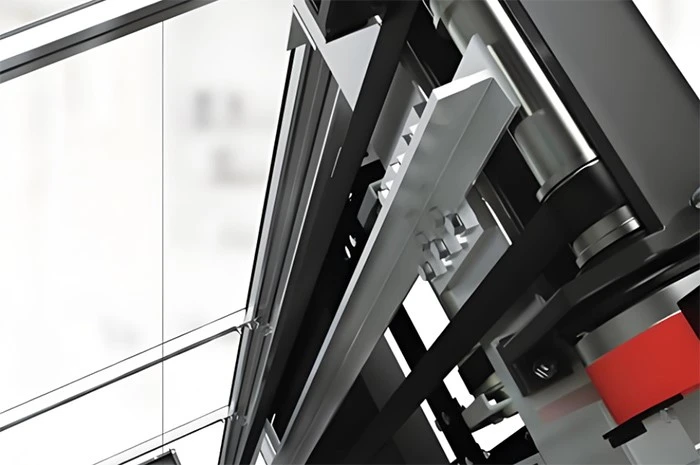
In 2000, OTIS elevators announced the introduction of the Gen elevator system, which first adopted flat steel belt technology to replace steel cables for lifting elevator cars. Later, companies like Schindler also launched their own steel belt products.
While this structure has certain advantages in shaft space, for example, with the same shaft width, the steel belt structure can increase the net width of the car by 5 to 10cm compared to a steel cable structure. However, compared to traditional steel cable technology, its maturity is slightly lower, requiring higher installation requirements, slightly higher equipment costs, and relatively higher maintenance costs. With continuous product technology maturation, this series of products has vast development potential in the future.
● Advantages
Improved Elevator Efficiency: Compared to other drive methods, the steel belt traction elevator has higher rotational efficiency, effectively reducing energy loss and making the elevator run more stably.
Lower Noise: The steel belt traction residential elevator uses a new type of polymer material steel belt, which is low in density, high in strength, abrasion-resistant, and has strong temperature adaptability. It can effectively reduce vibration and noise during operation, enhancing the riding experience.
Strong Carrying Capacity: The steel belt of the steel belt traction elevator is usually woven from multiple strands of steel wire ropes, making it highly load-bearing and suitable for different types of elevator needs.
● Disadvantages
High Noise: In some cases, the steel belt traction elevator may produce relatively loud noise during operation, mainly due to friction between the elevator car, steel belt, and pulleys during movement.
Influence of Temperature Changes: Since the traction system of the steel belt traction elevator mainly uses steel belts and pulleys, which are susceptible to temperature changes, the elevator's lifespan may be affected when outdoor temperatures vary significantly.
● Applicable Occasions
Residential: Villas and residential communities often install traction elevators to facilitate residents' access.
Commercial Buildings: Traction elevators in commercial buildings can quickly and conveniently transport items to designated floors, making it convenient for business management.
Office Buildings: Traction elevators in office buildings can facilitate employees' access and improve work efficiency.
● Price
This residential elevator price varies greatly depending on the brand, number of floors, decoration, and other requirements. For example, Otis Elevator Company offers steel belt traction elevators ranging from several thousand to tens of thousands of USD.
10. Backpack Frame Steel Wire Rope Traction Elevator
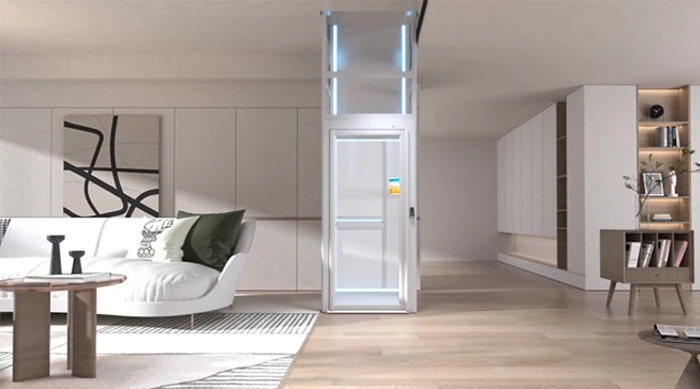
The backpack frame steel wire rope traction elevator is an elevator structure characterized by its traction wheel and motor being installed at the top or sidewall of the elevator shaft, resembling a "backpack". It connects the car and counterweight through steel wire ropes to achieve vertical movement. This structure is commonly used in traditional residential lifts and elevators and some specific occasions.
● Advantages
Simple Installation: The installation process of the backpack frame steel wire rope traction elevator is relatively simple, requiring no large-scale civil engineering. It can be installed on the existing elevator shaft or building sidewall.
High Space Utilization: Due to the backpack-style design, it can effectively utilize space, suitable for villas or buildings with limited space.
Cost-effective: Compared with other types of elevators, the backpack frame steel wire rope traction elevator offers high cost-effectiveness.
● Disadvantages
Limited Load Capacity: Due to the structural characteristics of the backpack-style elevator, its load capacity is relatively small and not suitable for large items or multiple people using it simultaneously.
Slow Operating Speed: Compared with traditional traction elevators, the backpack frame steel wire rope traction elevator may have a slower operating speed.
Potential Safety Hazards: As the backpack-style elevator moves on the sidewalls of buildings, there may be certain safety hazards during use, requiring enhanced safety measures.
● Applicable Occasions
Villas: Due to the high space utilization of the backpack-style residential elevator, it is suitable for installation in villas, especially villas with limited space.
Lofts or Duplexes: In these multi-level residences, the backpack frame steel wire rope traction elevator can be a convenient choice for internal transportation.
Small Commercial Spaces: Such as small supermarkets, cafes, etc., the backpack-style elevator can conveniently connect different floors.
● Price
Due to the development of small shaft technology and small traction machines, the residential lifts and elevators with gantry frame structure have gradually replaced the backpack frame structure. Currently, there are few residential elevator companies that can provide such products. You can communicate with residential elevator factory based on specifications and configurations to obtain satisfactory prices for this type of residential elevator.
Summary: Advantages and disadvantages of 10 residential elevators
|
Types of Residential Elevator |
Advantages |
Disadvantages |
|
Hydraulic Elevator |
Low requirements for civil structure Safe and reliable Smooth operation and low noise |
High power consumption Slow lifting speed High maintenance cost |
|
Traction Elevator |
High Safety Performance Stable and Noise-free High Power Transmission Efficiency |
Limitations of Building Structure Large Occupied Space Complicated Installation Process |
|
Vacuum Elevator |
No Pit Required, Easy Installation Modular Design, Easy Assembly Small Occupied Space |
Limited Lifting Height and Load Capacity Higher Maintenance Cost |
|
Pitless Elevators |
Space-saving Easy installation Perfect integration with decoration |
Difficult maintenance Higher cost |
|
MRL Elevator |
Space-saving Smooth operation Strong adaptability |
Noise and vibration Temperature impact Difficulty in fault repair and personnel rescue |
|
Spiral elevator |
Saves floor area Low civil engineering requirements Flexible, stable, and reliable structure |
High mechanical noise Slow operating speed Poor comfort |
|
Linear Motor Elevator |
Stable operation and low noise Low energy consumption Small footprint |
Complex technology High cost High installation requirements |
|
Gantry Steel Wire Rope Traction Elevator |
Stability and Reliabilit Energy Efficiency Mature Technology |
Large Size Potentially High Host Power |
|
Steel Belt Traction Elevator |
Improved Elevator Efficiency Lower Noise Strong Carrying Capacity |
High Noise Influence of Temperature Changes |
|
Backpack Frame Steel Wire Rope Traction Elevator |
Simple Installation High Space Utilization Cost-effective |
Limited Load Capacity Slow Operating Speed Potential Safety Hazards |
FUJI: Your Professional Residential Elevators Manufacturer!
FUJI Elevator, as a major elevator manufacturing company, boasts over 35 years of residential elevator production history. With superior technical strength and exquisite craftsmanship, it creates high-quality elevator products.
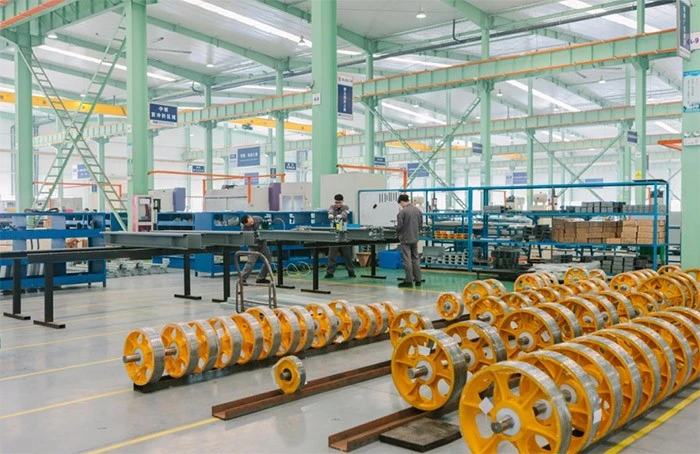
Not only committed to fulfilling customers' individual needs, FUJI elevator company has also won widespread market recognition for its competitive prices and excellent performance. We promise that FUJI Elevator will continue to provide you with elevator solutions that exceed expectations in terms of quality, service, and innovation.