


With the improvement of people's living standards, home elevator and villa elevator have become crucial components of modern high-quality residences. Although both types of elevators fall within the category of residential elevators, they have fundamental differences in product positioning and market value.
What is Home Elevator?
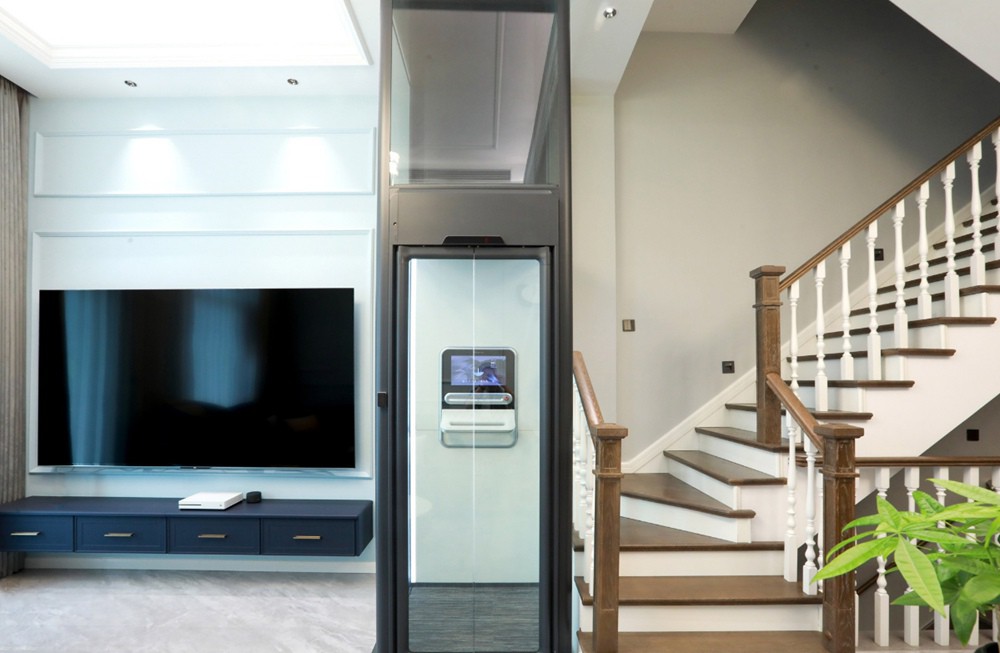
Home elevator is a vertical transportation device specifically designed for ordinary residential environments. It mainly serving multi-story apartments and duplex houses. The core design concept of such elevators is the perfect combination of practicality and economy. It aims to solve the problem of daily convenience for family members when moving up and down the floors.
From a technical perspective, home elevators usually adopt mature and stable drive systems. Load capacities range from 250 to 400kg. Speed is between 0.4 and 1.0 m/s. It fully meets the daily needs of families. Home elevators are particularly suitable for families with elderly people.
In international market, demand for home elevators is in rapid growth trend. According to industry data, the prevalence rate of home elevators in developed countries in Europe and the United States has reached 15% to 20%. The demand in emerging market countries is also growing rapidly. This is mainly due to population aging.
What is Villa Elevator?
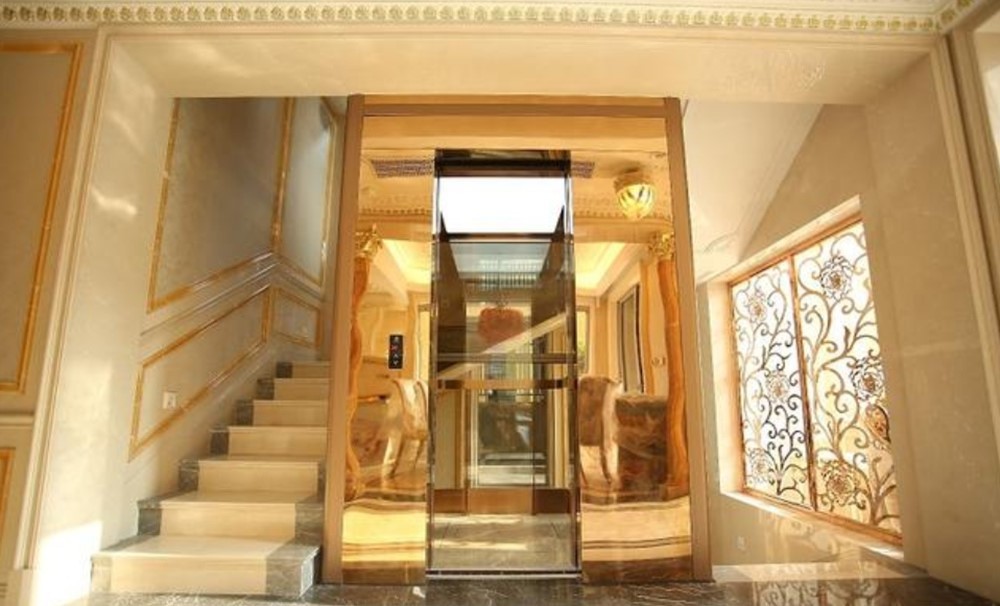
Villa elevator is a high-end vertical transportation solution tailored specifically for luxurious living spaces.Such as luxury villas and resort estates. Unlike home elevators, villa elevators not only have basic transportation functions but also represent a luxurious lifestyle.
From the perspective of product positioning, villa elevators are good at every detail reflecting exquisite craftsmanship and outstanding quality. They adopt the most advanced drive technologies, such as machine-room-less permanent magnet synchronous drive systems. Speeds from 0.4 to 1.5 m/s. Capacity is usually designed to 320 to 630 kg. It is customized for larger capacities to easily accommodate large items such as wheelchairs and furniture.
The market positioning of villa elevators determines that they must be perfectly integrated with the overall architectural style. Whether it is modern minimalist style or European classical luxury, they can achieve harmony and unity through customized design. This high degree of personalized customization ability makes villa elevators an indispensable highlight configuration in high-end residential projects.
Main Difference Analysis
1. Differences in Size and Space Requirements
Space Features of Home Elevator:
Home elevators are designed with full consideration of the space limitations of ordinary residences.Their shaft dimensions are relatively compact and standardized. Common shaft dimensions range from 900mm×900mm to 1200mm×1200mm. This size range can not only meet basic usage needs but also not occupy too much valuable living space. The internal dimensions of the car are usually designed to be 800mm×800mm to 1000mm×1000mm. It is enough to accommodate 2 to 4 adults standing comfortably.
In terms of installation requirements, home elevators have a relatively low demand for structural modifications of buildings. Many models support retrofitting in existing buildings. It greatly reduces installation difficulty and cost. The shaft structure usually adopts light steel structures or prefabricated modular designs.

Space Advantages of Villa Elevator:
Villa elevators exhibit a completely different space concept. Shaft dimensions from 1500mm×1500mm to 2000mm×2000mm. It not only provides a more comfortable experience but also can easily accommodate large items, such as wheelchairs and furniture.
The installation of villa elevators requires early planning and is usually integrated with the architectural structure design. This requires considering technical parameters such as the installation position of the elevator and shaft structure. The shafts mostly adopt reinforced concrete structures to ensure sufficient structural strength and stability. In addition, villa elevators also support multiple door opening options.Such as center-opening doors, side-opening doors, and through-doors.
2. Differences in Technology and Functions
Technical Features of Home Elevator:
Home elevators focus on mature stability and easy maintenance in terms of technology selection. They mainly adopt the following drive methods:
● Low-power Traction Drive: It uses permanent magnet synchronous motors, with good energy-saving effects and smooth operation. However, it requires a certain top height to install the drive equipment.
In terms of functional configuration, home elevators mainly meet basic needs. It includes floor calls, door control and other basic functions. The control system adopts a standardized design with a simple and intuitive operation interface.
Technological Advancement of Villa Elevator:
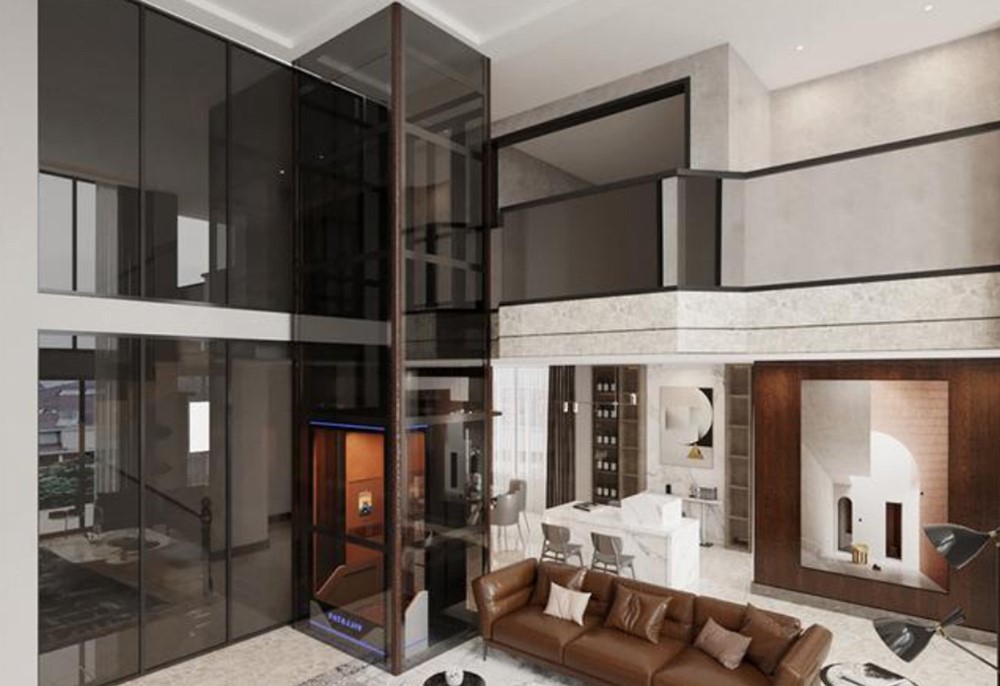
Villa elevators represent the highest level of residential elevator technology:
Machine-room-less Permanent Magnet Synchronous Drive: It adopts the latest permanent magnet synchronous gearless technology. It has high operating low energy consumption and low noise.
Intelligent Control System: Equipped with an advanced microprocessor control system, it supports multiple intelligent functions:
● Face recognition or fingerprint recognition for startup
● Voice control operation system
● Remote monitoring and control via mobile APP
● Integration with smart home systems
● Multimedia information display system
3. Differences in Safety Standards and Comfort
Safety and Comfort of Home Elevators:
The safety design of home elevators follows relevant standard requirements and is equipped with a complete set of safety protection devices:
Safety devices include: speed limiter-safety gear linkage systems, buffers, door lock protection devices, overload protection, emergency lighting, and alarm systems, etc. These devices ensure that the elevator can stop in a timely manner and protect the safety of passengers in case of abnormalities.
● In terms of comfort, home elevators reach the industry standard level:
● The operating noise is controlled below 55 decibels.
● The leveling accuracy is within ±5mm.
● The acceleration is optimized to avoid obvious stuttering.
● The car is equipped with basic lighting and ventilation devices.

Superior Experience of Villa Elevators:
Villa elevators set higher standards in terms of safety and comfort:
Multiple Safety Protection Systems: In addition to standard safety devices, they also add:
● Emergency rescue automatic leveling system (automatically runs to the nearest floor in case of a power outage)
● Fault self-diagnosis and early warning system
● Dual braking guarantee system
● Anti-prying door protection device
● Video surveillance and safety intercom system
● Extreme Comfort Experience: Villa elevators pursue a first-class cabin-like ride experience:
● Ultra-quiet design with operating noise below 45 decibels
● Precisely adjusted acceleration curves for seamless and smooth operation
● Leveling accuracy reaching an extreme level of ±2mm
● Car environmental control system: constant temperature air conditioning and air purification
● High-end lighting system: dimmable LED lighting
4. Differences in Design and Decoration Styles
Design Concept of Home Elevators:
The design of home elevators is dominated by practicality and economy, with a simple and generous appearance and a focus on functionality. Common decoration configurations include:
● Material Selection: Mainly durable and easy-to-clean materials.Such as 304 stainless steel plates and tempered glass. Surface treatments mostly adopt processes such as hairline finishing, mirror finishing, and sandblasting.
● Style Options: They offer a limited number of standardized style options. Such as modern minimalist style and classic business style. Color combinations are relatively conservative. It mainly using neutral tones such as silver and black.
● Decorative Elements: The decorations include basic indicators and handrails, etc. Personalized customization options are mainly meeting basic usage needs.
Luxury Design of Villa Elevators:
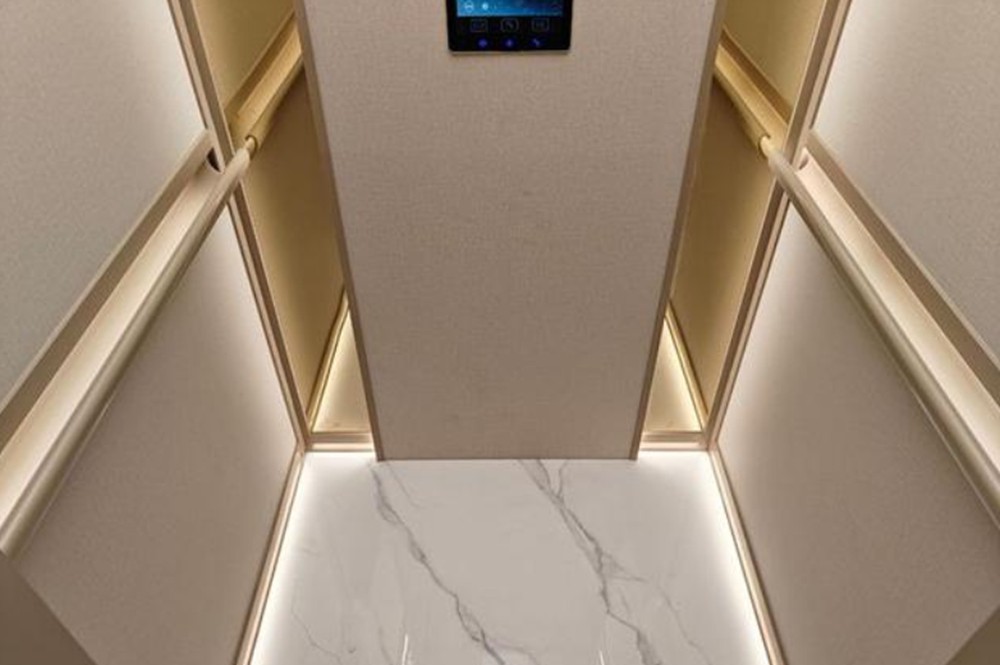
The design of villa elevators every detail reflecting luxury and taste:
Application of High-end Materials: They use top-grade decoration materials such as solid wood veneers,leather cladding and metal carvings.
Diverse Style Options: They support in-depth customization styles:
● Modern minimalist style: simple lines, hidden designs, and a sense of smart technology
● European classical style: carved decorations, gold elements, and luxurious materials
● New Chinese style: modern interpretations of traditional elements, wooden textures, and Oriental charm
● Artistic decoration style: artistic patterns and personalized expressions
● Artistic button and display panel designs
● Personalized logo
● Special surface treatment processes. Such as gold plating and chrome plating.
5. Differences in Price
Economic Analysis of Home Elevators:
The price positioning of home elevators is relatively affordable. It overall investment cost includes:
● Equipment Price: Usually between 8000 and 15000 USD.
● Installation Cost: It is relatively low between 3000 and 5000 USD. It depends on the site conditions and installation difficulty.
● The operating cost is low in energy consumption: monthly electricity bill of about 5 to 10 USD. The maintenance cost is about 200 to 400 USD per year.
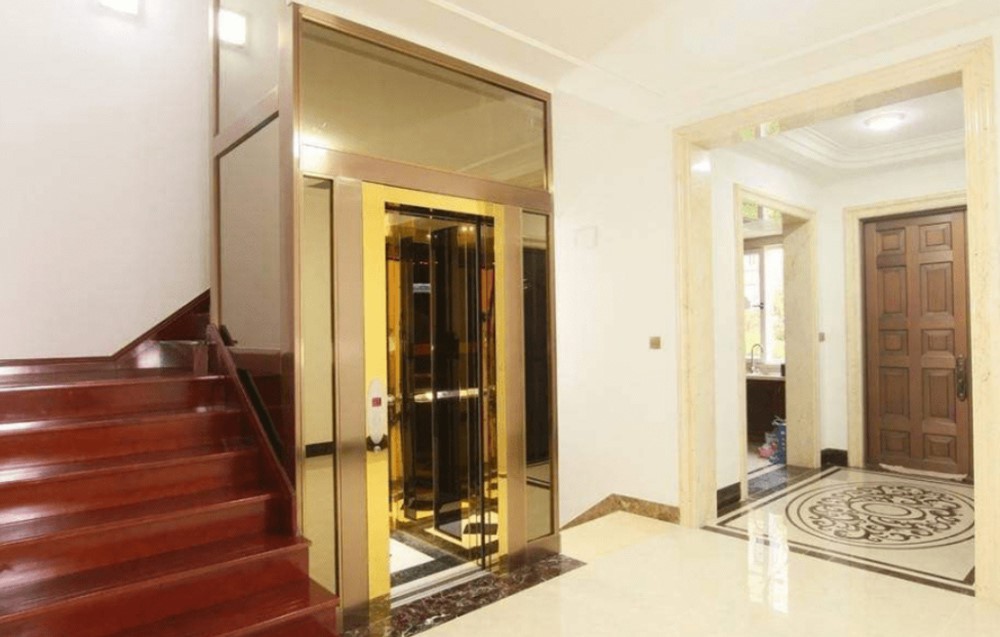
Value Investment of Villa Elevators:
Villa elevators belong to high-end investments:
● Equipment Price: Usually above 10000 USD.The price range is between 15000 and 30000 USD.
● Installation Cost: It is relatively high, usually between 5000 and 10000 USD. Because it requires a more professional installation team and a more complex construction process.
● Customization Cost: Additional costs generated according to personalized needs.Such as special materials and complex functions. It may increase by 10% to 30%.
● Operating and Maintenance Cost: Due to the more complex system, higher maintenance requirements result in an annual maintenance cost of about 400 to 800 USD.
6. Differences in Target Markets and Application Scenarios
Market Positioning of Home Elevators:
Home elevators mainly target the following scenarios:
Target Customer Groups: Middle-income families with elderly people or members with mobility issues.
Application Scenarios:
● Urban multi-story apartments and duplex houses
● Elevator retrofitting projects in old residential areas
● Age-friendly renovation projects
Luxury Positioning of Villa Elevators:
Villa elevators serve a completely different market segment:
Target Customer Groups: High-net-worth individuals. Owners of luxury mansions, luxury real estate developers and high-end hotels.
Application Scenarios:
● Luxury detached villas and estate mansions
● High-end resort properties and boutique hotels
● Top-tier business clubs and private clubs

Through the above in-depth comparative analysis, we can clearly see the significant differences between home elevators and villa elevators in multiple dimensions. Although both products serve the large category of "residential elevators," they are actually products targeting completely different market demands and customer groups.
Home elevators take practicality and economy as their core values and are ideal choices for solving basic vertical transportation needs. They are suitable for ordinary families with a limited budget but pursuing life convenience, offering excellent cost-effectiveness and a reliable user experience.
Villa elevators represent the highest level in the field of residential elevators and are manifestations of a luxurious lifestyle and status symbols. They are not just a means of transportation but also a perfect combination of art and technology.
As the professional team of FUJI Elevator, we suggest that you comprehensively consider the following factors when making a choice:
● Actual usage needs and budget situation
● Residential space conditions and structural characteristics
● Long-term usage plans and maintenance costs
|
Comparison Dimensions |
Home Elevator |
Villa Elevator |
|
Usage Scenarios |
Multi-story apartments Duplex houses |
Luxury villas Resort estates |
|
Capacity |
250 to 400kg |
320 to 630 kg |
|
Speed(m/s) |
0.4 and 1.0 |
0.4 to 1.5 |
|
Drive Type |
Hydralic, VVVF |
VVVF |
|
Shaft(mm) |
800×800 to 1000×1000 |
1500×1500 to 2000×2000 |
|
Price(USD) |
8000 and 15000 |
above 10000 |
If you are considering choosing an appropriate elevator solution for your residence or project, the professional team of FUJI Elevator is ready to provide you with comprehensive support and services at any time.
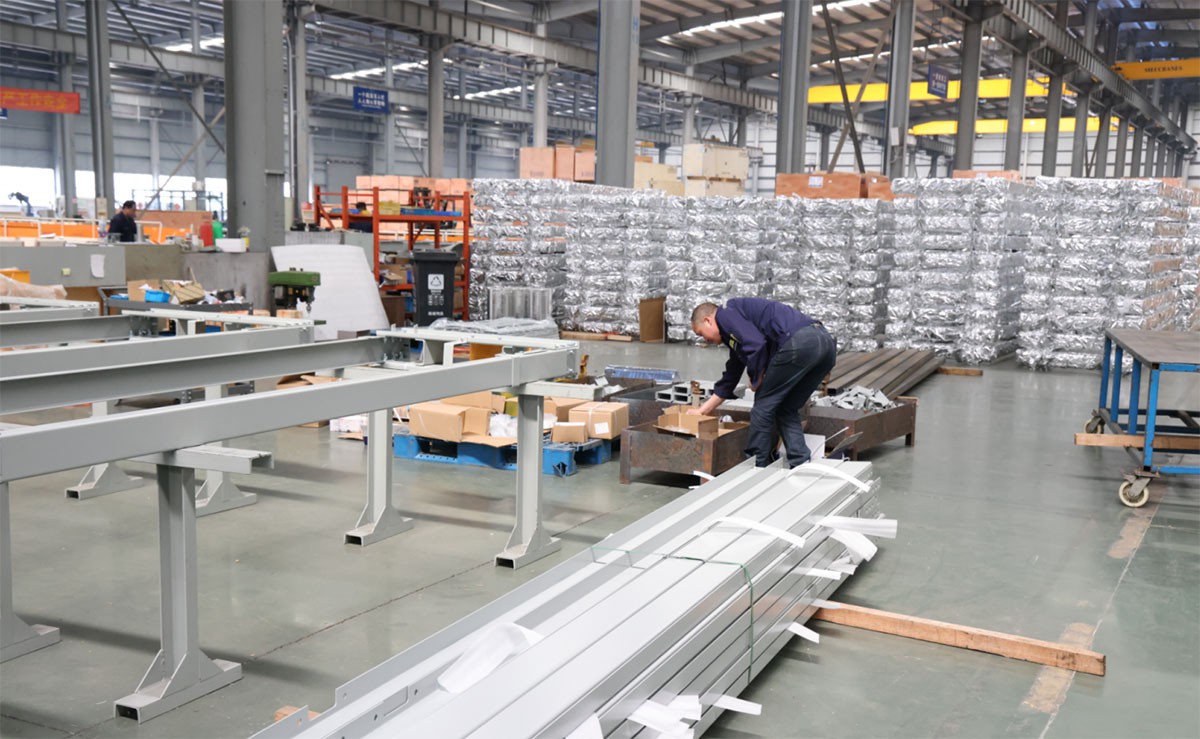
FUJI Elevator has over 30 years of elevator production experience and over 20 years of elevator export experience. We exporting elevators to more than 80 countries around the world and receiving positive feedback from customers.