


Fuji Elevator : Your Professional Commercial Car Elevator Supplier!
Fuji Elevator Co.,Ltd is a professional manufacturer and supplier of elevators. Our company was established in Huzhou, China in 1987, integrating elevator research and development, production, sales, installation and after-sales service. Currently, we mainly operate Passenger Elevator, Observation, Elevator, Hospital Elevator, Freight Elevator, Home Elevator, Car Elevator, Escalator and Moving Walk products. These elevators have been exported to more than 60 countries and regions including the United States, Australia, Russia, and Ukraine, and have won widespread praise from customers.
Rich Experience
We have more than 35 years of experience in elevator manufacturing and sales, are capable of providing elevator design, installation and after-sales solutions to customers in different regions.
Well Equipped
We have an intelligent manufacturing center of 60,000 square meters and an office space of 18,000 square meters, equipped with multiple robot production lines, intelligent spraying lines, and automated production lines.
Quality Assurance
We have a CNAS certified testing center, all production processes comply with ISO standards, and our products have also obtained ASME, CE, SGS and other certifications.
Customized Services
All our elevators accept customized designs, including dimensions, wall thickness, materials, etc. based on the actual site design, and support printing with your logo.

5000kg Parking FUJI Car Elevator
5000kg parking FUJI car elevator sets high industry standards. Multiple safety precautions, including emergency braking systems and anti-skid designs, ensure rapid response in any unexpected situation and minimize risks.

Center Opening FUJI Bed Elevator
Center opening FUJI bed elevator is a highly reliable elevator product designed specifically for medical institutions, aiming to provide safe and comfortable vertical transportation experiences for patients in the ward and caregivers. This elevator combines the advanced technology and rich experience of FUJI elevators with the needs of professional medical facilities, fully meeting the special requirements of places such as hospitals and nursing homes.

Side Opening FUJI Bed Elevator
Side Opening FUJI Bed Elevator is a vertical transportation solution specifically designed for hospitals and medical institutions, aiming to provide patients and medical staff with a comfortable and safe riding experience. FUJI elevator incorporates advanced technology and design concepts to meet the special needs of medical environments for large space and stability.

Medical Service Elevator use advanced control systems and high-quality components to ensure smooth and smooth operation under various operating conditions and reduce the risk of accidents caused by elevator failure or instability. In addition, FUJI medical elevators have undergone strict quality inspection and durability testing. The elevators can meet the long-term and high-intensity use requirements of medical facilities. Its solid structural design and advanced fault diagnosis system ensure the safety and reliability of the elevator during operation, greatly reducing the frequency of maintenance and component replacement, and reducing operating costs.

3-Folded Center Opening FUJI Freight Elevator
3-Folded Center Opening FUJI Freight Elevator is a state-of-the-art equipment designed for modern logistics needs. Standing out with its heavy load capacity, efficient operation, and excellent cost-effectiveness, This freight elevator perfectly combines FUJI's exquisite technology and engineering strength to meet the transportation needs of various large and heavy goods.

Double-Folded Center Opening FUJI Freight Elevator
Double-Folded Center Opening FUJI Freight Elevator is a highly efficient and stable freight elevator system designed for commercial and industrial settings. Known for its excellent performance and large capacity, this elevator can meet the needs of various heavy goods transportation. Its innovative design and reliable technology ensure smooth and efficient operation, making it an ideal choice for commercial and industrial applications.

Side Opening Freight Elevator is crafted using high-quality materials and components. Rigorous testing ensures their durability under even the most demanding conditions, ensuring consistent performance over time. The robust construction and advanced electrical systems mean fewer maintenance issues and lower operational costs. The intelligent fault diagnosis system can pinpoint and address potential problems, ensuring continuous operation.

Center Opening Freight Elevator
The Center Opening Freight Elevator adopts an advanced center opening design, which evenly distributes cargo during lifting, effectively avoiding the phenomenon of eccentric loading and ensuring stability and safety during transportation. Whether it's heavy equipment or precision instruments, the FUJI center opening elevator can ensure their stability during transportation, reducing the risk of damage.

3000kg Shopping Mall FUJI Car Elevator
Ceiling: Paint steel (color optional)
Car wall: Paint steel (color optional)
Car door: Paint steel (color optional)
Floor: Checkered steel plate
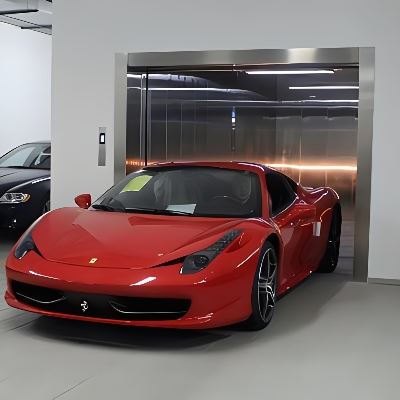
A commercial car elevator, also known as an automobile elevator or car lift, is a type of vertical transportation system designed to lift vehicles between different levels of a building, such as between floors of a parking garage or showroom. These elevators are specifically designed to accommodate the weight and dimensions of automobiles, making them an efficient and space-saving solution for parking and vehicle display in commercial settings.
Features of Commercial Car Elevator
High Load Capacity
Commercial car elevators are engineered to support heavy loads, typically ranging from several thousand pounds to tens of thousands of pounds, depending on the specific model and design. This high load capacity allows them to safely transport multiple vehicles simultaneously, maximizing parking efficiency.
Robust Structural Construction
Commercial car elevators feature a sturdy structural framework constructed from durable materials such as steel or reinforced concrete. This robust construction ensures the elevator can withstand the weight of vehicles and the stresses of frequent use without compromising safety or performance.
Safety Features
Safety is a top priority for commercial car elevators, and they are equipped with various safety features to protect both vehicles and occupants. These may include emergency stop buttons, safety locks, overload sensors, fire-rated materials, and safety barriers to prevent accidents and ensure passenger safety.
Hydraulic or Traction Drive System
Commercial car elevators utilize either hydraulic or traction drive systems to lift and lower vehicles between floors. Hydraulic systems use hydraulic fluid and pistons to generate vertical movement, while traction systems use cables and counterweights. Both systems are designed for smooth, reliable operation and can be tailored to suit the specific needs of the building.
Elevator Car
The elevator car is the enclosed platform that carries passengers or goods between different floors. It is equipped with safety features such as an emergency button and sensors to detect obstructions.
Counterweight
The counterweight is a weight that balances the weight of the elevator car and its passengers. It is attached to the opposite end of the elevator cable, reducing the amount of work required by the elevator motor.
Elevator Motor
The elevator motor is responsible for moving the elevator car and counterweight. It is usually located at the top of the elevator shaft and uses a system of pulleys and cables to lift and lower the car.
Guide Rails
Guide rails are installed along the elevator shaft to provide a smooth and safe movement of the elevator car. The car is equipped with rollers that run along the guide rails, keeping it aligned and preventing sideways movement.
Safety Systems
Elevators are equipped with various safety systems to ensure the well-being of passengers. These include emergency brakes, overspeed governors, and safety sensors to detect obstructions or malfunctions.
Control System
The control system is the brain of the elevator, overseeing all operations and coordinating the movement of the elevator car. It includes buttons and interfaces for passengers to select their desired floor and monitors various sensors and inputs to ensure smooth and safe operations.
Door System
The door system consists of doors that open and close at each floor to allow passengers to enter and exit the elevator car. It also includes safety features such as door sensors to prevent closing on objects or people.
Electrical Power Supply
Elevators require a reliable source of electrical power to operate. They are typically connected to the building's electrical grid and may also have backup power systems in case of power outages.
Motor
The motor in an elevator is responsible for converting electrical energy into mechanical energy to drive the elevator car. It provides the necessary power to move the car up and down the shaft. The motor is usually located at the top or bottom of the elevator shaft and is connected to the drive system.
Drive System
The drive system in an elevator consists of several components that work together to transmit power and control the movement of the elevator car. It includes pulleys, gears, belts, and sheaves. The pulleys and sheaves are responsible for guiding and redirecting the cables that connect the car to the counterweight. The gears ensure smooth and precise movement by controlling the speed and torque of the motor.
How To Choose Commercial Car Elevator
Identify Your Needs
Determine the specific requirements of your commercial space, such as the maximum weight and dimensions of the vehicles you need to transport, the frequency of use, and the available space for the elevator.
Consider Types of Car Elevators
There are various types of car elevators, including hydraulic, traction, and machine-room-less (MRL) elevators. Each type has its own advantages and disadvantages, so choose one that best suits your needs and budget.
Evaluate Space Constraints
Consider the available space for the elevator, including the dimensions of the elevator shaft and the required overhead clearance. Choose an elevator that fits within these constraints.
Review Safety Features
Safety is paramount when it comes to car elevators. Look for features such as emergency stop buttons, safety brakes, and door interlocks to ensure the safety of passengers and vehicles.
Consider Maintenance Requirements
Evaluate the maintenance requirements of the elevator, including regular inspections and servicing. Choose an elevator that is easy to maintain and has a reliable service network.

Guide Rails Installation
The installation process kicks off with laying the foundation – the guide rails. These rails serve as the elevator's tracks and require precise alignment for seamless operation. Properly installed guide rails ensure the elevator car's smooth movement within the shaft.
Assembling Hoistway Components
Next comes the assembly of hoistway components, including support brackets, counterweight guide rails, and pulley systems. Each component plays a critical role in the elevator's functionality. Their accurate installation is essential for the elevator's long-term performance.
Elevator Carriage Installation
The elevator carriage, or cab, transports passengers and goods. Installing the carriage involves integrating it with the guide rails and hoistway components. Ensuring safety during this phase is paramount, as any oversight can compromise the elevator's operation.
Wiring and Electrical Components
The heart of Commercial Car Elevator lies in their electrical components. This phase involves the installation of the elevator control panel, wiring, and safety switches. Precise wiring and adherence to safety standards are imperative to prevent malfunctions and accidents.
How to Maintain Commercial Car Elevator
Preparation
The initial step in this maintenance routine is careful preparation, which includes notifying building occupants about the impending maintenance schedule.
Visual Inspection
Once the preparation phase is complete, a comprehensive visual inspection of the entire elevator system ensues. This involves a thorough examination of the elevator car, hoistway doors, and various components. The inspection aims to identify any visible signs of wear, corrosion, or damage. Special attention is given to electrical wiring and connections, ensuring they are in optimal condition to mitigate potential safety hazards.
Functional Testing
Functional testing constitutes another crucial aspect of elevator maintenance. This phase involves a meticulous series of tests to ensure that all safety features operate as intended. Emergency brakes, over-speed governors, interlocks, and door reopening mechanisms undergo rigorous testing to guarantee passenger safety during entry and exit. The emergency communication system is also scrutinized to ensure clear and reliable communication between passengers and building security.
Lubrication
Reducing friction and preventing premature wear is addressed through the application of appropriate lubricants to moving parts. This includes cables, pulleys, and door mechanisms, with particular attention paid to high-friction areas like elevator guide rails and pulley systems.
Cleaning
Maintenance extends beyond functionality to aesthetics and cleanliness. Regular cleaning of elevator components, such as door tracks, hoistways, and the interior of the elevator car, is imperative.
Adjustment
Fine-tuning settings and making necessary adjustments follow the visual inspection and functional testing phases. Components that may have shifted or become misaligned are carefully adjusted, ensuring synchronized door opening and closing times.
Certificate Photo


Frequently Asked Questions
Hot Tags: 5000kg parking fuji car elevator, China 5000kg parking fuji car elevator manufacturers, suppliers, factory, Car Elevator, 3000kg Shopping Mall FUJI Car Elevator, Commercial Car Elevator, 5000kg Parking FUJI Car Elevator, Industrial Car Elevator


